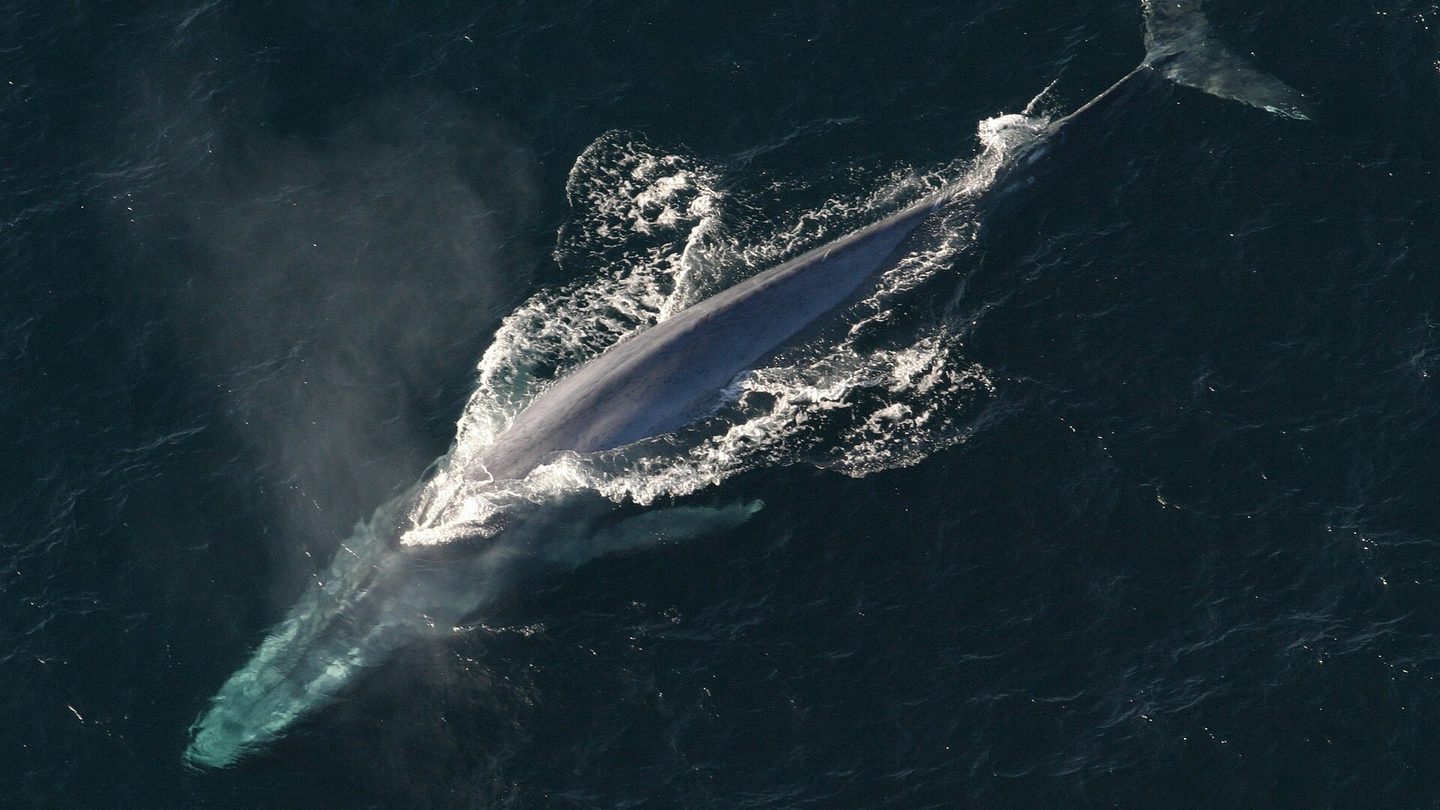

The numbers side by side
Length is what most bus comparisons mean. NOAA's blue whale page gives up to about 110 feet for Antarctic animals and up to about 90 feet in northern oceans. A standard Type C school bus is often cited around 40 feet long in manufacturer brochures; shorter cutaway buses can sit near 25 to 30 feet.
| Blue whale (NOAA maxima) | Typical U.S. school bus (manufacturer ranges) | |
|---|---|---|
| Length | Up to ~110 ft (Antarctic); up to ~90 ft (northern) | Often ~35–45 ft for full-size routes; shorter variants exist |
| Weight | Up to ~330,000 lb (Antarctic); >100,000 lb in northern oceans | Roughly 20,000–40,000 lb loaded (varies by model) |
| Takeaway | Longest animal known | Fixed road vehicle; good scale anchor only |
Do not treat the bus as a calibrated ruler at sea. Whale length estimates from boats are unreliable; NOAA field ID leans on spout shape, dorsal fin placement, and mottled coloration.
How fin and humpback whales fit the same yardstick
Fin whales top out around 75 to 85 feet in NOAA's fin whale profile—about two buses end to end at the high end. Humpbacks reach about 60 feet, closer to one and a half buses. Those comparisons are why FactCrumbs keeps dedicated pages: fin whale vs blue whale, humpback whale vs blue whale, and blue whale size compared to a bus (this page).
For behavior rather than tape measures, do blue whales breach explains why full leaps are rare despite the mass involved.