.jpg)
What Darwin actually wrote
Darwin didn't invent the phrase. Writers had already used "living fossil" a few times earlier in the 1800s, describing it in loose, popular terms rather than any formal sense. What Darwin did was borrow it for On the Origin of Species, where it appears exactly twice across the entire first edition. He used it to describe animals that had survived largely unchanged while their relatives died out, and he named three examples: Ornithorhynchus, the platypus; Lepidosiren, the South American lungfish; and the ganoid fishes, a group that today includes sturgeon, paddlefish, and gars. Even then he hedged, writing that such species "may fancifully be called living fossils," a wording that treats the label as a figure of speech rather than a formal scientific category, and that hasn't stopped biologists from reaching for it constantly ever since.
None of Darwin's three examples is the animal most people associate with the term today. That's mostly a matter of timing. The coelacanth, now the textbook "living fossil," wasn't known to be alive in 1859. Darwin died in 1882 having never heard of it.
The fish that returned from extinction
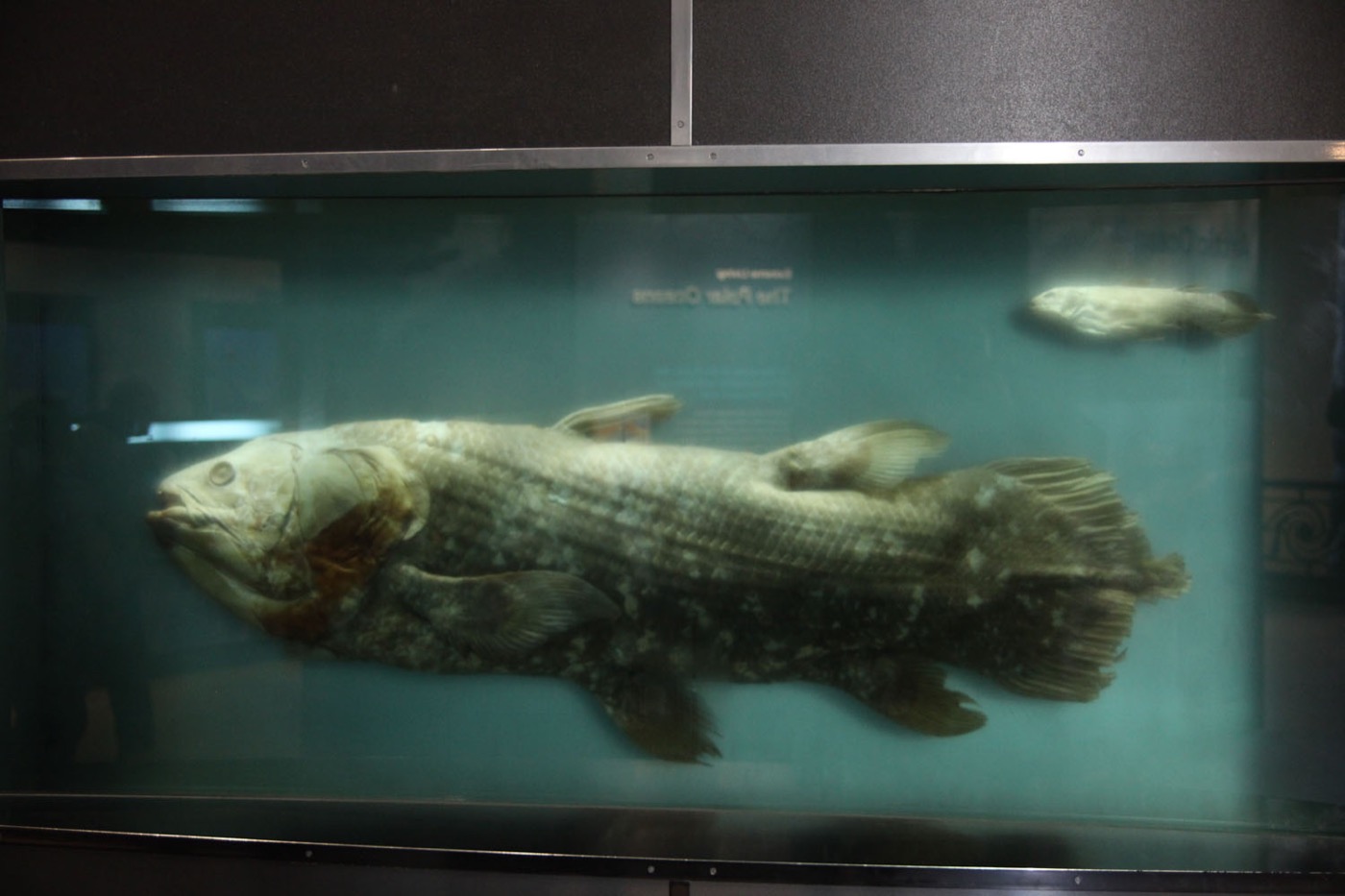
On December 22, 1938, Marjorie Courtenay-Latimer, curator of a small museum in East London, South Africa, got a call about an unusual catch from the trawler Nerine. Among the bycatch was a five-foot fish with hard scales, four limb-like fins, and a strange puppy-like tail. She sent a sketch to ichthyologist J.L.B. Smith, who confirmed it belonged to a group known only from fossils, the coelacanths, last recorded in rock layers from the end of the Cretaceous period, about 66 million years ago, the same extinction boundary that ended Mosasaurus and plesiosaurs.
The find made global headlines and cemented "living fossil" as popular shorthand for any creature that looks like it stepped out of the fossil record. But the coelacanth case also shows the limits of the label: a second living species, found off Indonesia in 1997, and ongoing genetic work have made clear that Latimeria continues to accumulate mutations at an ordinary rate. What stayed stable was its outward shape, not its DNA.

Why a 2013 shrimp study changed the conversation
The clearest challenge to the term came from an animal far less famous than the coelacanth. Triops cancriformis, a tadpole shrimp found in temporary ponds across Europe and Asia, has long been marketed in museum gift shops as a living link to fossils roughly 250 million years old. Dr. Africa Gómez and colleagues at the University of Hull sequenced DNA across tadpole shrimp populations worldwide and published their results in PeerJ in 2013.
Their conclusion undercut the whole premise. The living Triops cancriformis lineage, by their molecular-clock estimate, is under 25 million years old, meaning the ancient fossils used to advertise it may belong to a different species that simply looked similar. The study also turned up far more genetic diversity hiding inside what taxonomists had lumped together as a handful of species. Gómez put it directly, saying she would favor retiring the term "living fossil" altogether and calling it generally misleading.
The underlying issue reaches well past shrimp. A body plan can stay visually stable for tens of millions of years through ordinary stabilizing selection, while the genome underneath keeps changing at roughly the pace of any other lineage. Looking old and being genetically static turned out to be two separate claims that the term quietly bundles into one.
An old lineage isn't the same as an unchanged species
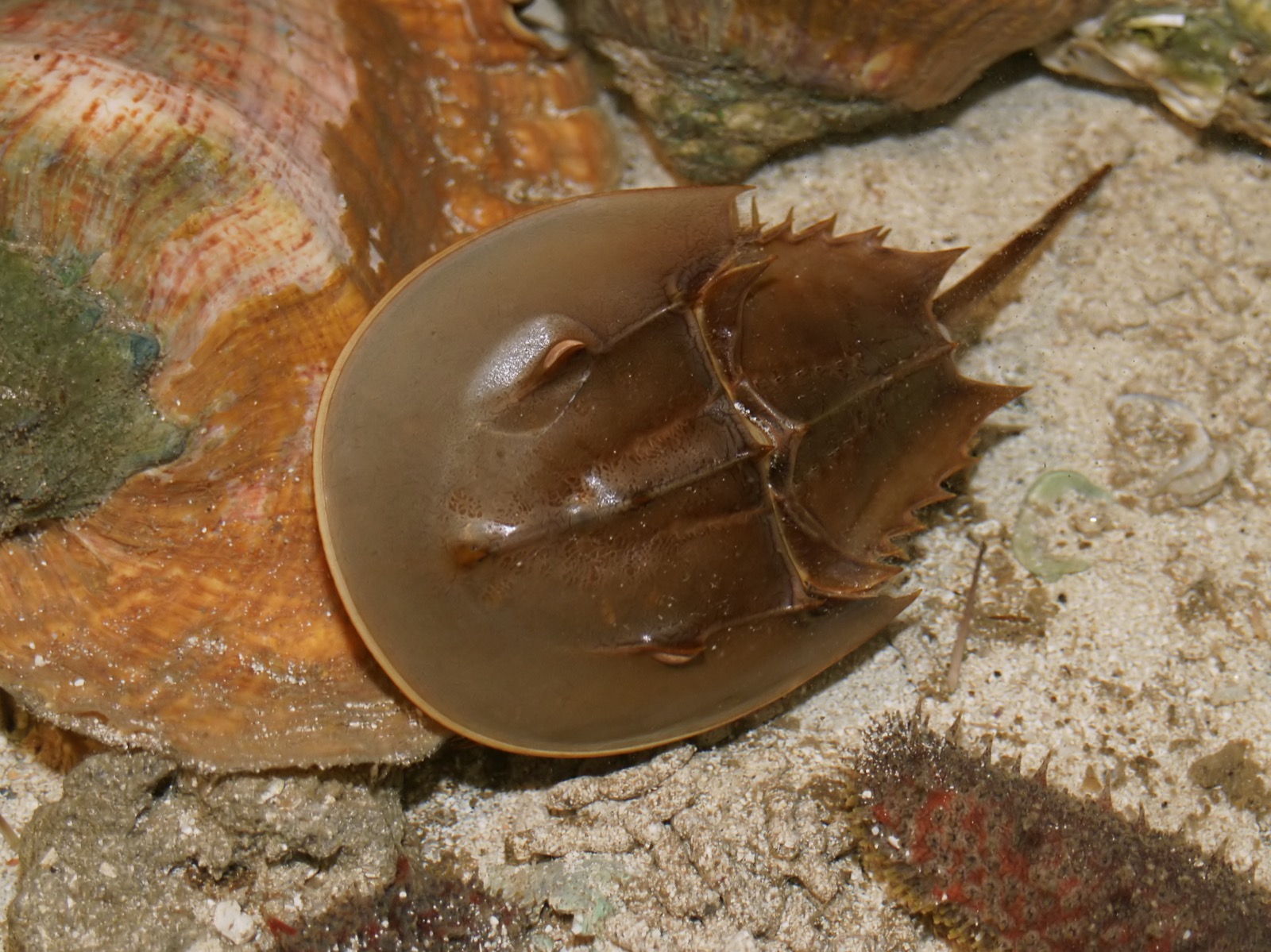
Horseshoe crabs illustrate the distinction from another angle. Fossils place the broader Xiphosura lineage at roughly 450 million years old, with the oldest confirmed specimen, from Manitoba, Canada, dated to about 445 million years, putting it in the same deep-time company as the 420-million-year fossil record of centipedes. Limulus includes the Atlantic horseshoe crab; the four living horseshoe crab species belong to more than one genus. The age of the wider lineage should not be treated as the age of an unchanged modern species.
What keeps horseshoe crabs relevant has nothing to do with resembling an ancestor. Their blue, copper-based blood clots almost instantly on contact with bacterial toxins, a reaction pharmaceutical labs harness in the Limulus Amebocyte Lysate test, one of the final safety checks before an injectable drug or vaccine batch can ship. Hundreds of thousands of horseshoe crabs are bled for this purpose each year, and synthetic alternatives built from a recombinant version of the same clotting protein have started to replace the practice at some manufacturers since the European Pharmacopoeia recognized one such alternative as equivalent in 2020.
A few other species carry the same label, and the same caveats
Ginkgo biloba is the only living species in its genus, and the wider Ginkgoales group appears in the fossil record as far back as the Permian period, roughly 270 million years ago, with leaf fossils from 200 million years ago that look almost identical to today's trees. It earns the "living fossil" label on structural grounds, but like every other case here, an unchanged leaf shape says nothing on its own about how much the tree's genome has shifted since.
The tuatara, found only on a small number of New Zealand islands, is the sole survivor of an order called Rhynchocephalia that split from lizards and snakes roughly 250 million years ago. Separate from that lineage entirely, it carries a parietal eye on top of the skull, complete with a lens and retina, that helps regulate its exposure to sunlight and gets covered by scales as the animal matures.
The chambered nautilus rounds out the usual list, its shell architecture largely unchanged since well before the dinosaurs. Each case gets filed under the same label, but each one earned it for a different reason, which is exactly the kind of blurring that researchers like Gómez argue the term papers over.