
How big it actually was
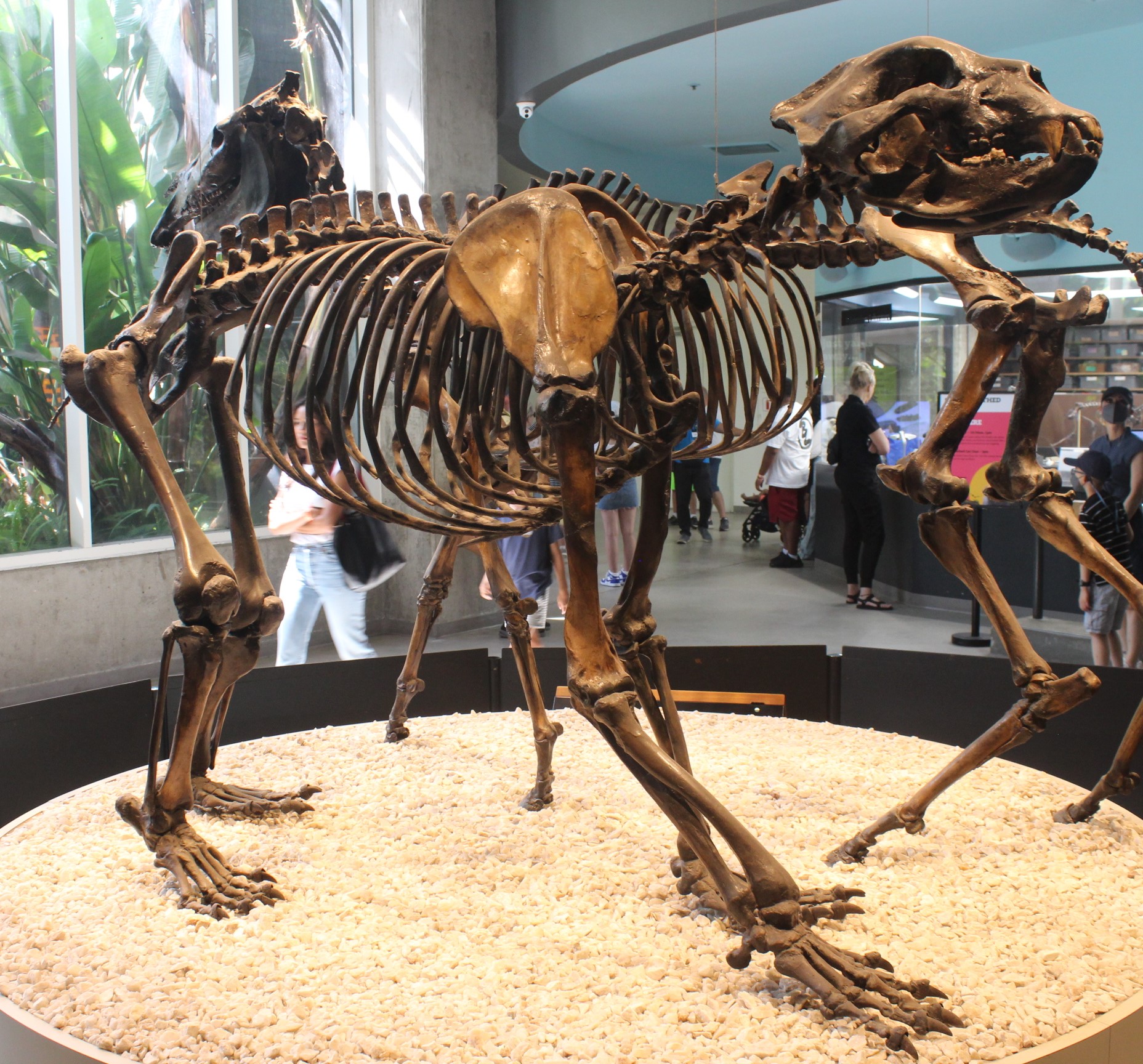
Arctodus simus is real, and by most measures it really was enormous. Estimates built from limb-bone scaling put the largest males at roughly 1.67 meters (about 5 feet 6 inches) at the shoulder, standing as tall as 3.4 meters (about 11 feet) on their hind legs, figures repeated closely enough across museum sources like the North American Bear Center and university natural history collections that the basic dimensions aren't in serious dispute. For comparison, a large modern polar bear, the biggest bear alive today, tops out around 1.6 meters at the shoulder and rarely exceeds 3 meters standing, meaning A. simus outsized even the largest living bear species by a meaningful margin.
Weight is messier, because it depends on which bones survive and how researchers scale them, and because the species turns out to have been strongly sexually dimorphic. Body-mass estimates from limb measurements put typical adult males around 700 to 800 kilograms (roughly 1,500 to 1,800 pounds), with the largest individuals approaching a metric tonne, while females cluster at 500 kilograms or less. A 2025 study in the Zoological Journal of the Linnean Society, led by Alexander Salis and including Blaine Schubert and Julie Meachen, sequenced ancient DNA from multiple specimens and determined the genetic sex of each: every large specimen it could assign a sex to came back male, every small one female, confirming that the huge size range reflects dimorphism within Arctodus simus rather than two separate species or subspecies, a question that had been open in the literature for decades.
The 40-mph "fastest bear" claim doesn’t hold up
Search for the giant short-faced bear anywhere online and one claim shows up constantly: that its long legs made it the fastest bear that ever lived, capable of running down prey at 30 to 40 mph, faster than a modern grizzly and in the range of a racehorse. The claim traces back to older reconstructions of A. simus as a long-legged, cursorial pursuit predator, built for speed the way a wolf or cheetah is built for speed, rather than a typical, plantigrade, walking bear.
That picture didn't survive closer scrutiny. In a 2010 paper in the Journal of Vertebrate Paleontology, Borja Figueirido and colleagues at the University of Málaga ran a comparative morphometric analysis of craniodental and limb measurements across cats, hyenas, dogs, and bears, looking for the kind of skeletal signature that shows up in animals actually adapted for fast, sustained pursuit. They found none. A. simus's limb proportions matched living omnivorous bears far more closely than they matched any cursorial predator, and the study's own title called it "the 'short-faced,' long-legged and predaceous bear that never was." The 40-mph figure isn't really an emergent scientific consensus so much as an old assumption that got repeated often enough to sound settled, a pattern of movement claims getting revised once someone runs the actual biomechanics that also shows up with Spinosaurus, whose swimming ability remains disputed after more than a decade of research.
Hyper-predator, hyper-scavenger, or something else?
Speed wasn't the only exaggerated claim. For years, paleontologists also debated whether Arctodus simus was a bone-crushing hyper-scavenger, an animal built to muscle other predators off carcasses and crack open the leftover bones for marrow, a reputation built partly on its sheer size and partly on the assumption that anything that big and that carnivorous had to be dominating the Ice Age food chain by force. It's the short-faced bear's version of the hunter-versus-scavenger argument that dogged Tyrannosaurus rex for years, minus the media attention.
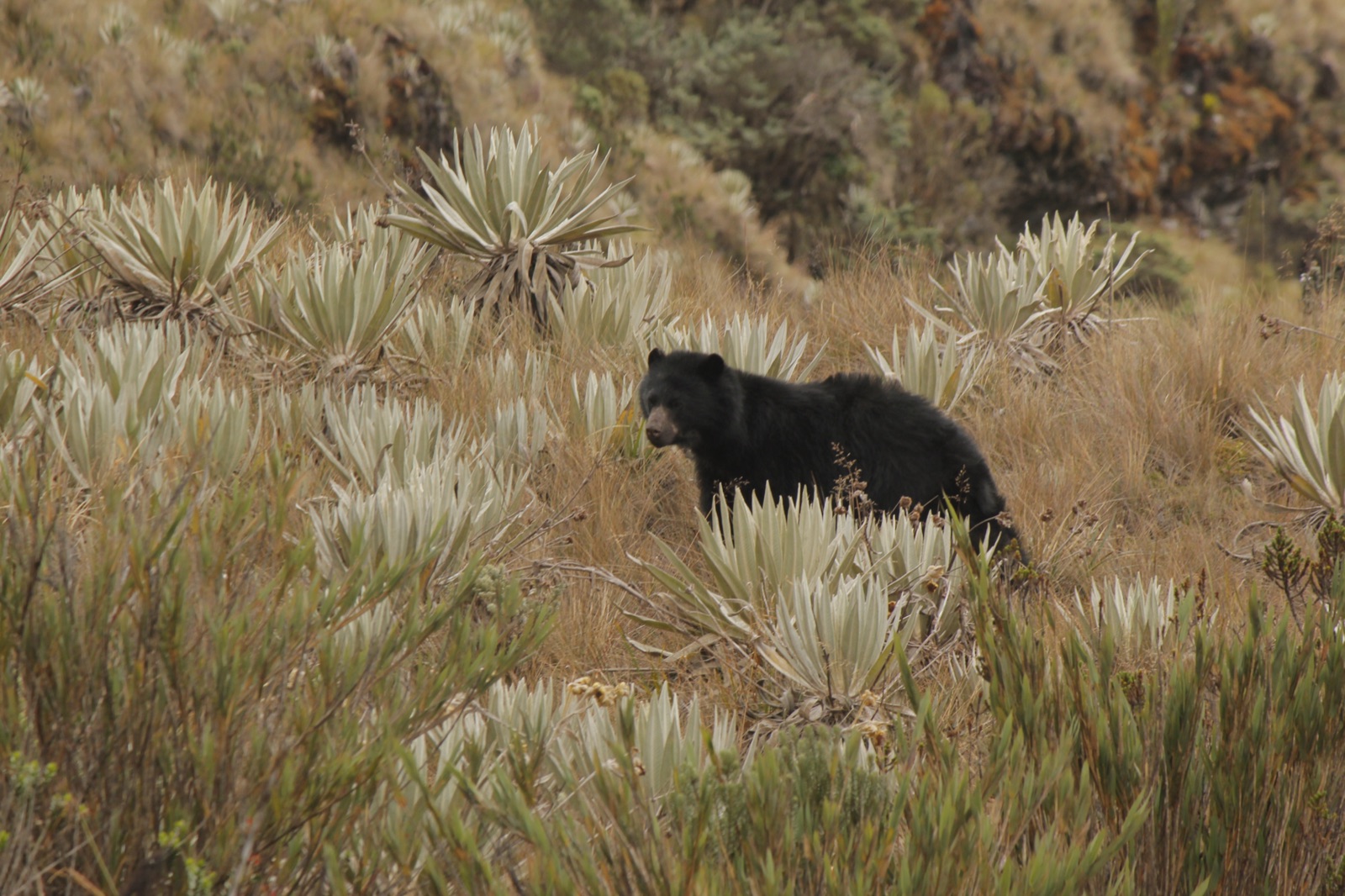
A 2013 PLOS ONE study led by Shelly Donohue, working with Larisa DeSantis, Blaine Schubert, and Peter Ungar, tested this directly using dental microwear texture analysis, a method that reads the microscopic wear patterns left on tooth enamel by whatever an animal actually chewed. They first calibrated the method on living bear species with known diets, from the mostly carnivorous polar bear to the mostly herbivorous giant panda and spectacled bear, then compared that baseline against A. simus specimens from Rancho La Brea. The wear pattern didn't match a bone-crusher. Instead, the paper reports that Arctodus simus "exhibits wear attributes most comparable to its closest living relative," the spectacled bear (Tremarctos ornatus), a small, tree-dwelling South American species that eats mostly fruit, bromeliad hearts, and other plant material, and the authors describe that finding as inconsistent with the hyper-scavenger hypothesis for the La Brea population.

Its diet wasn't the same everywhere
That doesn't mean Arctodus simus was secretly a plant-eater across its whole range, which stretched from Alaska down into central Mexico over roughly 1.8 million years. A separate line of evidence, stable carbon and nitrogen isotope analysis, tells a different story for the species' northern populations. A 2008 study in Palaeogeography, Palaeoclimatology, Palaeoecology, led by Kena Fox-Dobbs, examined isotope signatures from Beringian megafauna, the Ice Age ecosystem spanning Alaska and the Yukon, and found that A. simus specimens from that region carried an isotopic signal consistent with a heavily carnivorous diet, in line with other high-latitude Ice Age carnivores rather than with an omnivore browsing plant material.
The studies point to regional differences in diet: northern isotope samples indicate substantial meat consumption, while La Brea tooth wear resembles that of living omnivorous bears. Resource availability is a possible explanation, but these samples do not establish why the species persisted for close to two million years.
When and why it went extinct
Arctodus simus didn't fade out early. A 2010 study in Quaternary International by Blaine Schubert compiled new and previously published radiocarbon dates on short-faced bear fossils from across the contiguous United States and found several specimens dating to roughly 10,800 to 11,000 radiocarbon years before present. Radiocarbon ages require calibration before comparison with calendar-dated events. That places it among the late-surviving North American megafauna of the broader end-Ice Age extinction interval that also included mammoths, giant ground sloths and the saber-tooth tiger. A 2018 chronology paper summarizes the latest bear records as 10.9 to 10.7 thousand radiocarbon years before present, approximately 12.7 thousand calibrated years before present. These dated fossils demonstrate survival at those times. They do not pinpoint the final extinction.
No single cause is nailed down, but the timing lines up with the Younger Dryas, an abrupt cooling period that reshaped North American vegetation right as human hunters were spreading across the continent and the large herbivores short-faced bears likely relied on for meat, in at least some regions, were themselves declining. Changes in climate, prey availability and competition are possible pressures; their timing alone does not identify the cause of this bear's extinction.