
Myth: blue whales never breach
Discovery Whale Watch naturalists document rare blue-whale breaches in Monterey Bay and push back on absolute "never" language. NOAA Stellwagen Bank defines a breach as more than half the body clearing the surface—species agnostic. The corrected claim is probabilistic: humpbacks breach often on many watches; blue-whale full breaches are memorable because crews see few.
Read the sourced behavior page: do blue whales breach. Compare acrobatic species in humpback whale vs blue whale.
Myth: any large whale is a man-eater
Filter-feeding rorquals take krill and small fish, not people. NOAA viewing guidance treats the human risk as collision and harassment, not predation. Fin whales share that pattern; see are fin whales dangerous for a danger FAQ tied to agency etiquette.
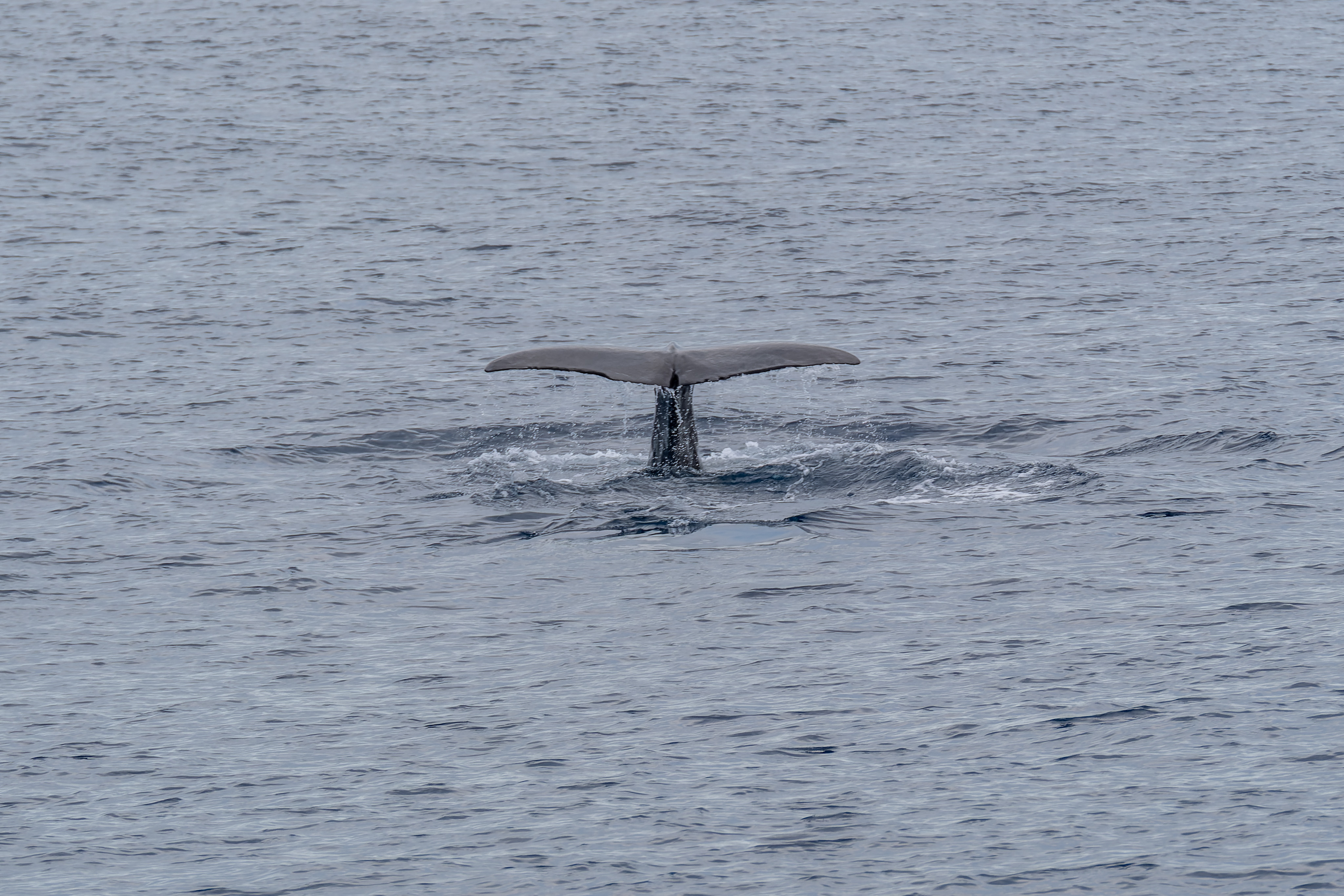
Toothed whales are different animals with different diets. The sperm whale page covers echolocation clicks and deep dives—not a license to swim with wild whales.
Myth: you can ID a fin whale from length alone
Northern blue whales near 90 feet overlap the upper fin-whale band in NOAA tables. Reliable fin-whale marks include white or light gray on the right lower jaw and a large hook-shaped dorsal fin. The comparison table lives on fin whale vs blue whale; gray-whale migration contrasts sit on gray whale vs humpback.