
The 1912 idea, and where Durkheim actually got it
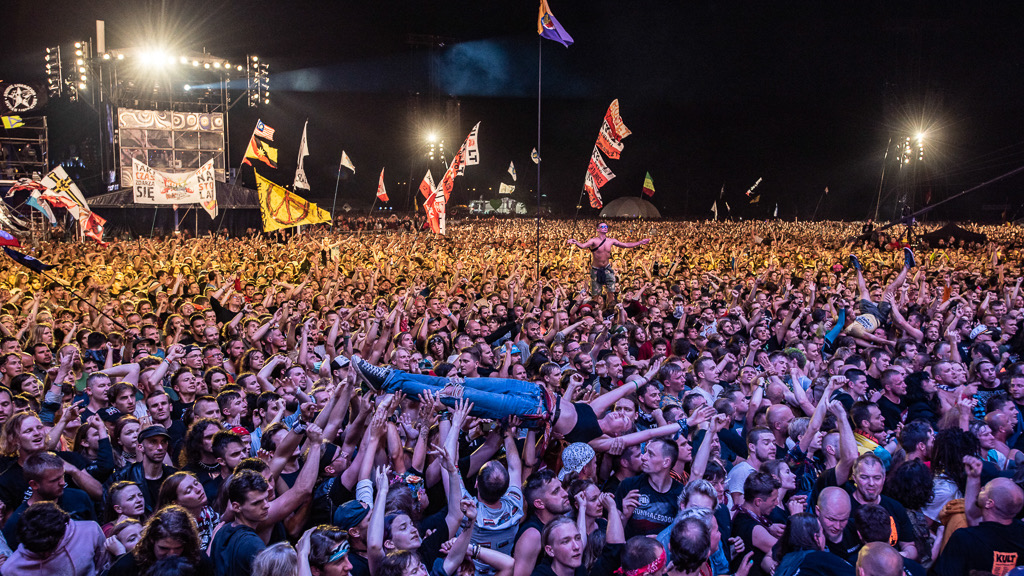
Émile Durkheim introduced the term in The Elementary Forms of Religious Life, published in 1912, built around a claim that seems almost circular until you sit with it: religion, in Durkheim's account, does not come from a private encounter with the divine. It comes from what happens to people physically gathered in a group, focused on the same object or action, moving or chanting together, until an emotional intensity builds up that feels like it is coming from outside any single person in the crowd. Durkheim called that surge collective effervescence, and argued it is the actual mechanism behind the idea of "the sacred" itself. A group does not decide an object is sacred and then feel moved by it, in his account. The surge comes first, during the ritual, and the group projects that feeling outward onto whatever symbol happened to be at the center of the gathering.
Durkheim never set foot in Australia, and his entire case rests on other people's field notes. He built the theory almost entirely from The Native Tribes of Central Australia, an 1899 ethnography by Baldwin Spencer and Francis Gillen, a book he had already reviewed years earlier in his own journal, L'Année Sociologique. Most of the specific ritual descriptions he leaned on, chanting, dancing, and hours-long ceremonies among the Arunta people of central Australia, came secondhand from Spencer and Gillen's account, not from anything Durkheim observed himself. That secondhand basis is a real limitation historians of the discipline still point to. It does not, on its own, settle whether the underlying claim, that synchronized group ritual produces a distinct emotional state, actually holds up. That question is what more recent research has gone looking for, with real measurements instead of secondhand description.
What a meta-analysis of 182,738 people found
In August 2022, a team led by José J. Pizarro at the University of the Basque Country published a meta-analysis in Frontiers in Psychology pooling 50 studies, drawn from 41 articles, covering 182,738 participants total. The studies spanned community celebrations, religious events, sports gatherings, music festivals, and, the largest single category at 15 studies, political demonstrations. Rather than asking people to rate an abstract concept directly, most of the underlying studies used a measure called perceived emotional synchrony, asking participants how much they felt their own emotional state mirrored everyone else's around them during the event.
The pooled results held up statistically. Collective effervescence correlated with general positive emotion at r = 0.55 and with self-transcendent emotions at r = 0.58, both strong effects by the field's usual standards, and both robust enough that a fail-safe N test, a check for how many unpublished null results it would take to wipe out a finding, came back requiring tens of thousands of missing studies (28,425 for the positive-emotion result, 21,636 for the self-transcendent one) to erase either result. Zooming into the demonstration subset specifically, the authors found collective effervescence predicted stronger group identity (r = 0.52), a firmer belief that the group's actions could actually change something, what researchers call collective efficacy (r = 0.37), and stronger moral conviction about the cause (r = 0.43). Group coordination occurs outside humans too: African wild dogs use sneeze counts during rallies associated with departing to hunt. That finding concerns a quorum for departure, not moral conviction or the emotional experience measured by the human questionnaires. In the human demonstration studies, collective effervescence also correlated with more intense negative emotion during the event itself (r = 0.14), a smaller but still measurable effect that matters for the darker side of the same mechanism, covered further down.
Measuring it in the body: 132 strangers at a concert
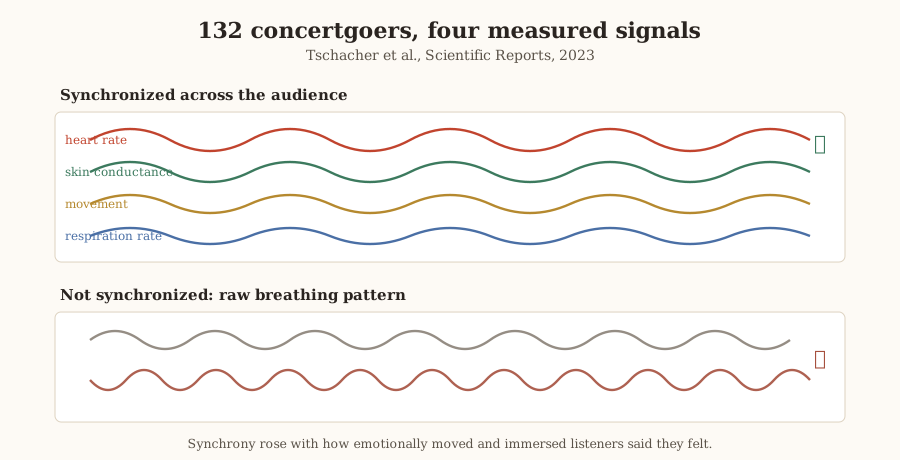
Feelings are hard to verify from the outside, so a team led by Wolfgang Tschacher at the University of Bern tried measuring collective effervescence in the body instead of just asking people to describe it. Published in Scientific Reports in October 2023, the study wired up 132 audience members across three separate live chamber-music concerts, all staging the same program of pieces by Beethoven, Brett Dean, and Brahms, and tracked heart rate, respiration rate, skin conductance, and body movement throughout each performance. Using a statistical technique called inter-subject correlation, the researchers could see, moment to moment, how closely each person's physiology tracked everyone else's in the room.
The audiences really did synchronize, in heart rate, skin conductance, and movement, and the effect was strongest around musically important structural moments in each piece. What did not synchronize was raw breathing behavior itself, even though respiration rate did. And the strength of that bodily synchrony was not random: individual synchrony rose in listeners who rated themselves, afterward, as more emotionally moved and more immersed in the music. That is a different kind of music-body link than the trained rhythmic precision a sea lion named Ronan can hit on a metronome beat, since nobody rehearsed the concert audience into sync; it emerged on its own from shared listening. A related 2021 study of the same kind of concert setting, led by Anna Czepiel, found the strength of physiological synchrony also depended on the music itself. Faster tempo predicted stronger synchrony, but only in styles the audience found familiar, Viennese Classical and Romantic pieces, not in an unfamiliar Contemporary piece on the same program. Strangers' bodies were not just reacting to sound. They were synchronizing around a shared understanding of what the music was doing.
It is not rare: how often people actually feel this
If collective effervescence needed a stadium or a religious ceremony to happen, it would be a genuinely rare experience for most people. A research program led by Shira Gabriel at the University at Buffalo tested whether that assumption was even true, running nine separate studies with more than 2,500 participants total and publishing the results in the Journal of Positive Psychology in 2020. The later studies in that series asked people directly how often they experience something matching the definition, a moment of feeling connected to others and sensing something meaningful about the shared activity, no matter how small the activity itself was.
In one sample of 239 adults recruited through ResearchMatch, a national volunteer registry, 75.3 percent reported experiencing at least some collective effervescence at least once a week, and 33.9 percent reported experiencing it daily. The single most common answer on the frequency scale was "a few times a week." A separate student sample answered almost identically. The events people described were not concerts or protests. They were things like an exercise class, a regular coffee shop visit, or a shift working the front desk at a job. People who reported more frequent everyday collective effervescence also reported higher wellbeing, an effect that held up even after accounting for how much general social connection they had, which suggests the ordinary, low-intensity version of the feeling is not just a diluted echo of the big one. In a separate example of learned group behavior, orca populations maintain dietary habits and vocal dialects through social learning. Those findings do not show that orcas experience collective effervescence or its reported wellbeing effects. The human survey results associate everyday collective effervescence with wellbeing; they do not establish an independent causal effect.
The same switch that makes a crowd sing can make it riot
Durkheim's own writing already hinted that collective effervescence was not automatically a force for good, and more recent crowd psychology has made that ambivalence explicit. John Drury, a social psychologist at the University of Sussex who studies crowd behavior in riots, protests, and mass emergencies, has argued that what makes a crowd feel intensely emotional is not really about the specific content of the emotion. It is about validation. Drawing on interview research with football fans and protesters conducted with colleagues Fergus Neville and Stephen Reicher, Drury describes a feedback loop: seeing your own excitement, or anger, mirrored on the faces of people around you confirms that the feeling is the correct response to the situation, which in turn makes you feel it more strongly, which then feeds back into the group.
That loop works the same way whether the shared emotion is joy or fury. Drury's own research on riots found that seeing anger in fellow crowd members confirms anger as an appropriate response, in the same structural way that seeing joy confirms joy at a concert or a goal celebration. Nothing about the underlying mechanism, physical co-presence, shared attention, and synchronized emotional expression, distinguishes a sing-along from a riot. What distinguishes them is the emotional content the group already carries into the gathering, and whatever happens to trigger it. That is a less comforting version of Durkheim's original idea than the one usually quoted at weddings and championship parades, but it is the same mechanism, doing the same job, on whatever material it is given.